
Home Office Design Ideas: Planning, Storage & Layout
Working from home looks different for every household, but the best home office design ideas usually start with the same goal: creating a space that supports focus, comfort, storage, and the way your home actually works.
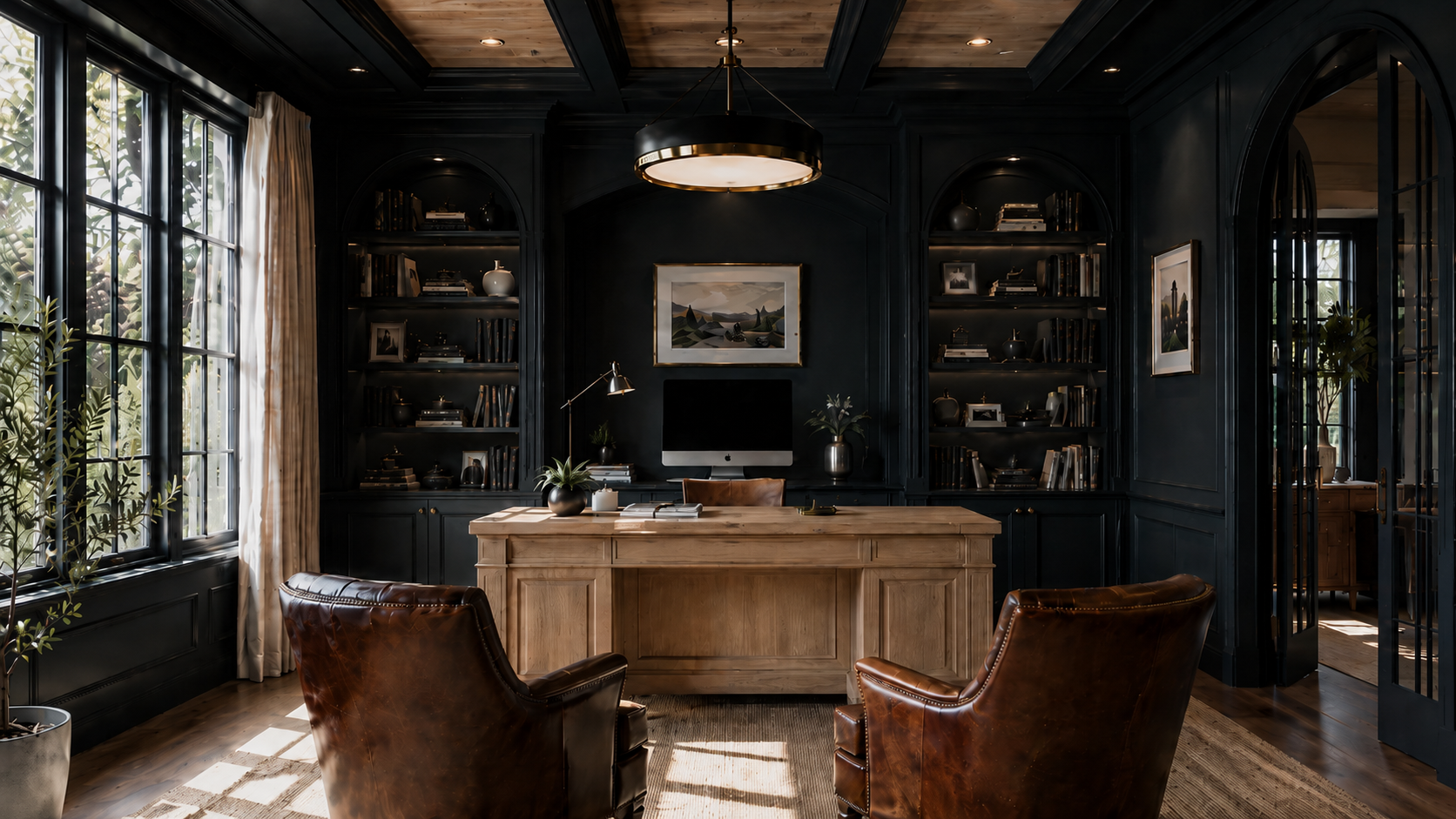
A Better Workspace Starts With the Right Plan
A well-designed home office should support more than a laptop and a chair. It should make daily work easier, keep clutter under control, feel comfortable for long stretches of time, and still look like it belongs in the rest of your home.
Whether the space is a spare bedroom, a finished basement, a loft area, a bonus room, or a converted dining room, the best home office design ideas start with how the room will actually be used.
Start With How You Actually Work
Before choosing paint colors, furniture, or décor, start with the way the space needs to function.
Consider these questions when planning:
These answers should guide the layout. A home office for occasional laptop work is very different from a full-time workspace used every day. The more clearly you define the purpose of the room, the easier it is to make smart decisions about storage, lighting, electrical needs, furniture, and finishes.
This is where planning matters. A home office that looks good but does not support your daily routine will become frustrating quickly.
Create a Designated Work Area
A productive workspace can be created in a spare bedroom, finished basement, loft area, bonus room, or underused dining room. What matters is that the space feels intentional.
Pay attention to lighting
Layer natural light, overhead lighting, task lighting, and glare control so the office feels comfortable, practical, and easy to use throughout the day.
Plan Storage Into Your Home Office From the Start
Storage is one of the biggest differences between a temporary workspace and a functional home office. Built-ins can help the office feel like part of the home instead of a collection of mismatched furniture.
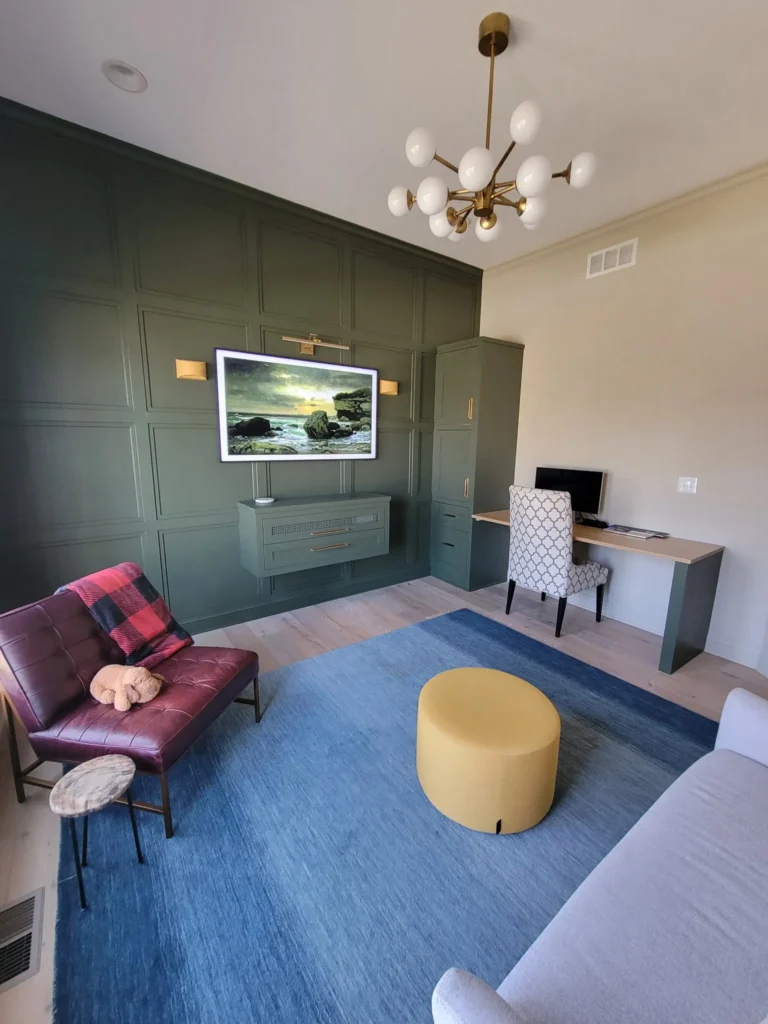
- Closed storage for supplies
- File drawers or bookcases
- Printer and equipment storage
- Cord management
- Shelving that fits the room
Why planning matters
Planning matters because home office design affects more than furniture placement. Built-ins, lighting, electrical outlets, internet access, storage depth, desk height, and room circulation all need to work together. When those decisions are made early, the finished office feels intentional instead of pieced together later.
That is why our design build process focuses on planning the layout, materials, lighting, and project details before construction begins.
Comfort & Ergonomic Planning
A home office desk setup should support the way you actually work, not fight against it. Before selecting furniture, think through how many hours you’ll spend at the desk, whether you need to shift positions throughout the day, and what adjustments would make the space feel more comfortable over time.
Ergonomics matter because poor posture and uncomfortable seating can compound over months and years. Rather than just purchasing an ergonomic chair, consider how the space itself can support comfort — desk height, monitor positioning, lighting that reduces glare, and room for movement. In a custom-designed home office, these elements work together. A built-in desk at the right height, positioned with proper sightlines to windows and light sources, can feel more comfortable than a collection of separate pieces that don’t quite fit together.
If you’re planning a home office remodel or renovation, think about comfort as a design problem, not just a shopping list. The space should grow with your needs, not become uncomfortable after a few months.
Bring in Natural Light
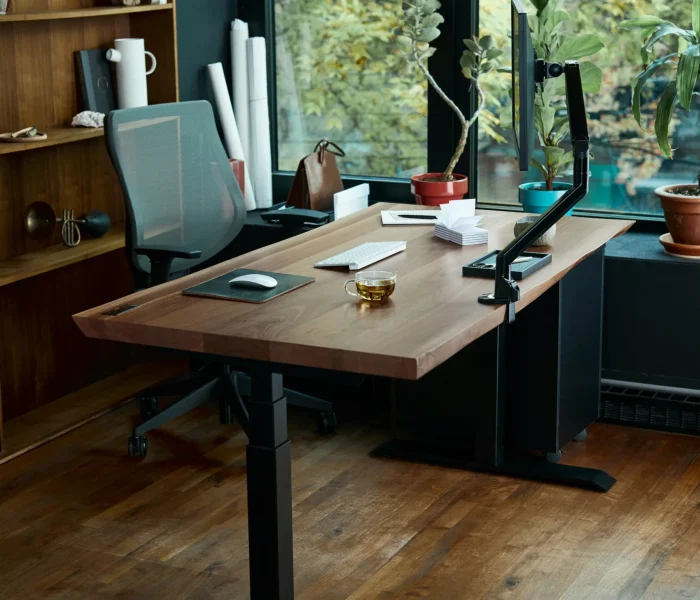
Spending hours in a dark, poorly lit space takes a toll on your mood and energy. Natural light should be a key part of your office design — position your desk near a window when possible, and use sheer curtains or blinds to control glare without blocking light.
Daylight does more than make a space feel better. It helps reduce eyestrain and headaches from extended screen time, keeps you alert and motivated throughout the day, and creates a more pleasant environment overall. Natural light also supports your circadian rhythm, which matters when you’re working from home and spending hours indoors.
When planning a home office remodel, consider window placement, orientation, and light control as design elements — not just afterthoughts. Good natural lighting can be the difference between a space that feels energizing and one that feels draining by day’s end.
Electrical & Tech Infrastructure
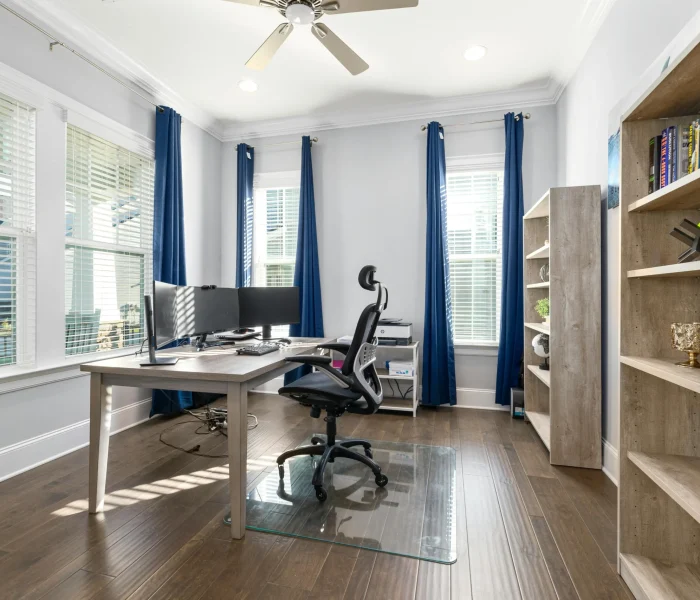
Remote work relies on reliable power, internet, and cord management. Before finishing a home office space, plan where outlets, USB charging stations, and network connections need to be located. This is especially important if you’re building a dedicated office in a basement, spare room, or converted space that may not have adequate electrical infrastructure.
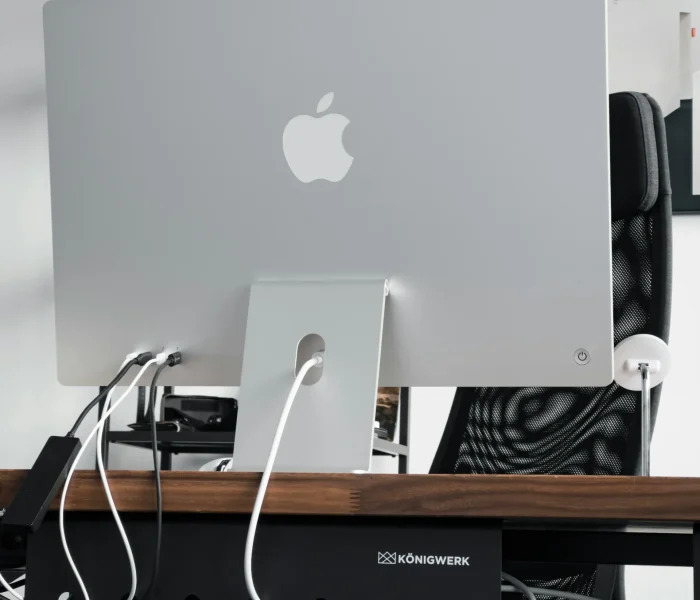
Poor planning here leads to visible cords, extension cords running across floors, and the frustration of being tethered to one spot in the room. In a well-designed home office, electrical and data outlets are built into the walls, desk surface, or cabinetry in locations that make sense for your workflow — not wherever the existing outlets happen to be.
Consider what equipment you use now and what you might need in the future. A contractor can help integrate electrical planning into the overall design so technology feels like a seamless part of the space, not an afterthought.
Flexible Spaces for Different Uses
A home office that works only when you’re sitting at a desk isn’t very flexible. The best home office designs include space for movement — a place to stretch, take calls while walking, or shift your working position.
This is where room layout and designated zones come in. A well-planned office might include a work surface for focused tasks, a secondary surface or table for meetings or collaboration, and a comfortable seating area for breaks or calls. Built-in seating, banquettes, or flexible furniture arrangements can make the space feel intentional and support different types of work throughout the day.
If your home office is part of a larger room conversion or remodel, think about how the space needs to function beyond just “a place to sit at a desk.” A finished basement office, for example, might include a work area, a small meeting zone, and a comfortable lounge area — all designed to feel cohesive and professional, not like random furniture crammed into a room.
Ready to Create a More Functional Home Office?
Thinking about a home office remodel, built-in office cabinetry, or a larger room conversion in Central Indiana? We can help you think through layout, storage, lighting, electrical needs, and finishes before the work begins.
Frequently Asked Questions
What makes a good home office design?
A good home office design starts with understanding how you actually work — not just fitting a desk into an available room. It should support focus, comfort, storage, and daily function. The best home offices feel intentional and finished, not like an afterthought.
Good design also means planning before you build. Consider how many hours you’ll spend working, what equipment you need, where natural light comes from, and what storage problems you need to solve. A well-designed office brings all these elements together — desk height, lighting, electrical outlets, storage, and layout — so the space works for you instead of against you.
Do I need a dedicated room for a home office?
Not necessarily. A productive home office can be created in a spare bedroom, basement, loft, guest room, or even a converted closet. What matters is that the space feels intentional and separate from the rest of your home, so you can focus on work and then step away when you’re done.
The key is intentionality. Whether it’s a full room or a corner of another space, the office should feel like a designated work zone — not just a desk squeezed into leftover space. When the space is planned with purpose, it supports both productivity and work-life balance.
Are built-ins a good idea for a home office?
Absolutely. Built-ins are one of the biggest differences between a temporary workspace and a functional home office. Custom cabinetry, shelving, and integrated storage create a finished, professional look while solving real storage problems. They also make the space feel like part of your home, not a collection of mismatched furniture.
Built-ins also allow you to plan for the future. You can integrate electrical outlets, cable management, and technology infrastructure into the design from the start. Instead of working around existing constraints, you design the space to work exactly the way you need it to. That’s what separates a room that will frustrate you after a few months from a space you’ll love using for years.
Can Ntegrity Builders help with a home office as part of a larger remodel?
Yes — and we also do home office remodels as standalone projects. If you’re planning a thoughtfully designed office with custom built-ins, integrated electrical, quality finishes, and a layout that actually works for how you live, we can help bring that to life.
We approach home office projects the same way we approach any remodel: planning first, understanding how you work, then building it right. Whether it’s a standalone office or part of a larger renovation, we focus on creating a space that functions beautifully and lasts.
Ready to discuss your home office project? Schedule a discovery call to talk through your vision and scope.